
Healthcare — Melbourne, VIC
Melbourne Medical Clinic Achieves 100% Call Compliance with AI Transcription
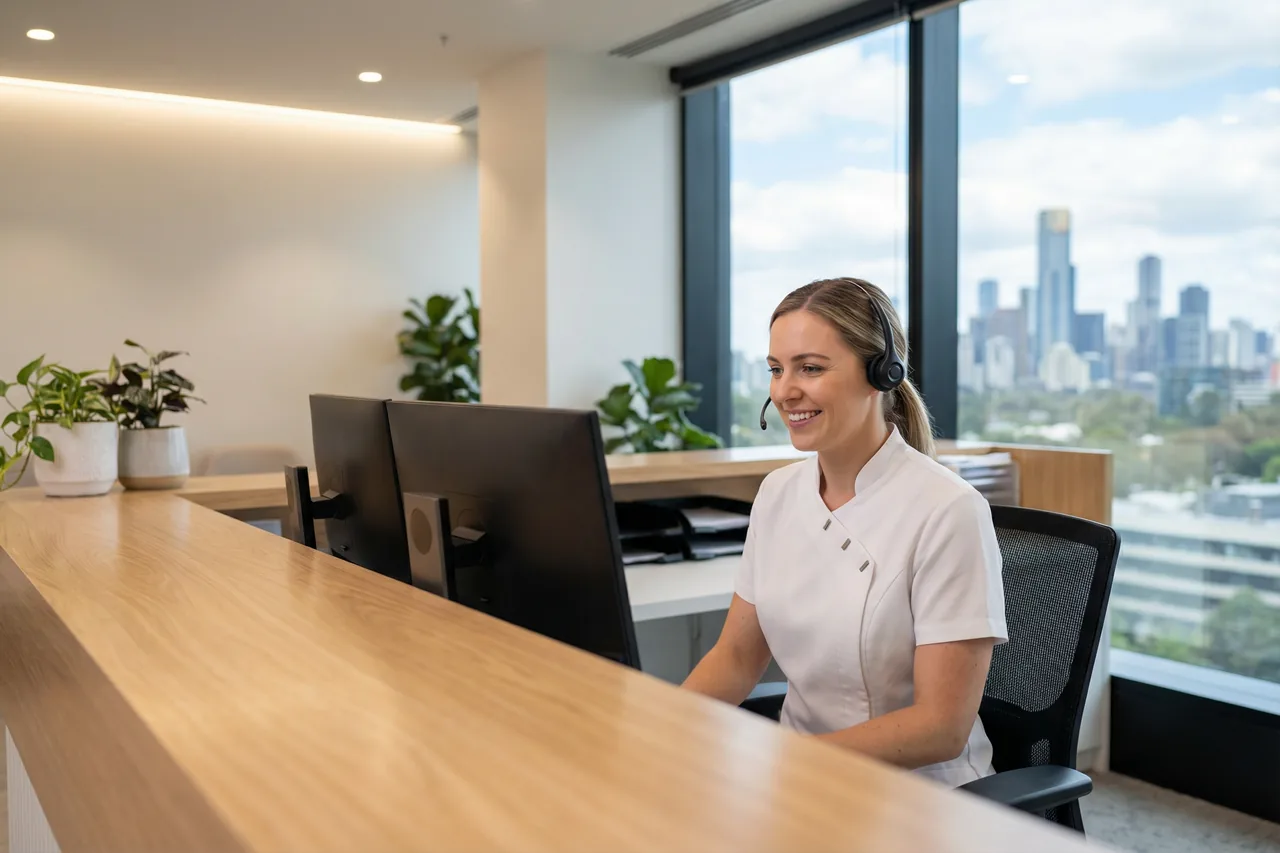
100%
Of all patient calls transcribed automatically
75%
Reduction in compliance review time
99%
AI transcription accuracy rate
$0
Additional hardware required
Overview
Consider a general practice clinic in Melbourne's inner suburbs with six GPs, two practice nurses, and three receptionists. The clinic sees approximately 120 patients per day and handles around 80 inbound phone calls. Most of those calls are routine — appointment bookings, prescription refill requests, referral queries, and test result enquiries. But a meaningful proportion involve clinical information: a patient describing symptoms, a GP's receptionist relaying instructions, or a nurse following up on a hospital discharge.
For years, the clinic had no way to record or review those calls. If a patient later disputed what they had been told, there was no record to refer to. If a receptionist misheard a medication name or missed a detail in a message, there was no way to check. The practice manager had raised the issue with the clinic's previous phone provider, but the cost of adding call recording had been quoted at several hundred dollars per month on top of the existing plan.
After switching to Click2Call's Cloud PBX with AI Voice Tools, the clinic now records and transcribes 100% of all patient calls automatically. The transcripts are searchable, stored securely in the portal, and available to the practice manager within minutes of each call ending. Compliance review time dropped by 75% in the first month.
The Challenge
The clinic's primary challenge was compliance and risk management. In the healthcare sector, the consequences of a miscommunication can be serious. A patient who is told the wrong appointment time may miss a time-sensitive consultation. A receptionist who mishears a medication instruction may pass on incorrect information to a patient. Without a record of the call, there is no way to determine what was actually said.
The practice manager had implemented a manual note-taking policy, requiring receptionists to document the key details of every call in the patient management system. But this was inconsistent in practice. During busy periods — particularly Monday mornings and after public holidays — receptionists were handling multiple calls simultaneously and notes were often incomplete or delayed. The practice manager estimated that roughly 30% of calls were not being documented adequately.
A secondary challenge was after-hours call management. The clinic closed at 6pm on weekdays and was not open on weekends. After-hours calls went to a generic voicemail, but the voicemail box was not checked until the following morning. Patients with urgent (but non-emergency) queries had no way to reach the clinic, and the practice manager had no visibility over what calls were coming in outside business hours.
The existing phone system was also hardware-dependent. The clinic had four physical desk phones at the reception desk and a separate phone in each consulting room. When a GP needed to make a call from a consulting room, they had to use the room's dedicated phone, which was not connected to the main reception system. There was no way to transfer a call from reception to a consulting room, or to see which rooms were currently on a call.
The Solution
The clinic moved to Click2Call with 9 user seats (three receptionists, two nurses, and four GPs) at $25 per user per month. The existing clinic phone number was ported across. Each consulting room GP received an extension on the Click2Call desktop app, installed on the existing consulting room computer. Receptionists continued to use headsets, now connected to the Click2Call softphone application rather than physical handsets.
Call recording was enabled on all inbound and outbound calls. The AI Voice Tools transcription service was activated, which processes each recording within minutes of the call ending and produces a searchable text transcript stored in the portal. The practice manager set up a daily digest email showing all calls received, with a flag on any calls where the AI detected elevated patient sentiment — a feature that helps identify calls that may need follow-up.
The AI Receptionist was configured for after-hours calls. Between 6pm and 8am on weekdays, and all day on weekends, the AI Receptionist answers calls, identifies the nature of the enquiry, and either directs the caller to emergency services (for urgent medical situations) or takes a detailed message with the caller's name, date of birth, and reason for calling. The message is sent by email to the on-call GP and to the practice manager's inbox immediately.
The ring group was configured so that all three receptionists' extensions ring simultaneously for inbound calls. If no receptionist answers within 20 seconds, the call is placed in a queue with a custom on-hold message advising the approximate wait time. If the queue exceeds 3 minutes, the caller is offered the option to leave a voicemail that is automatically transcribed and emailed to the reception team.
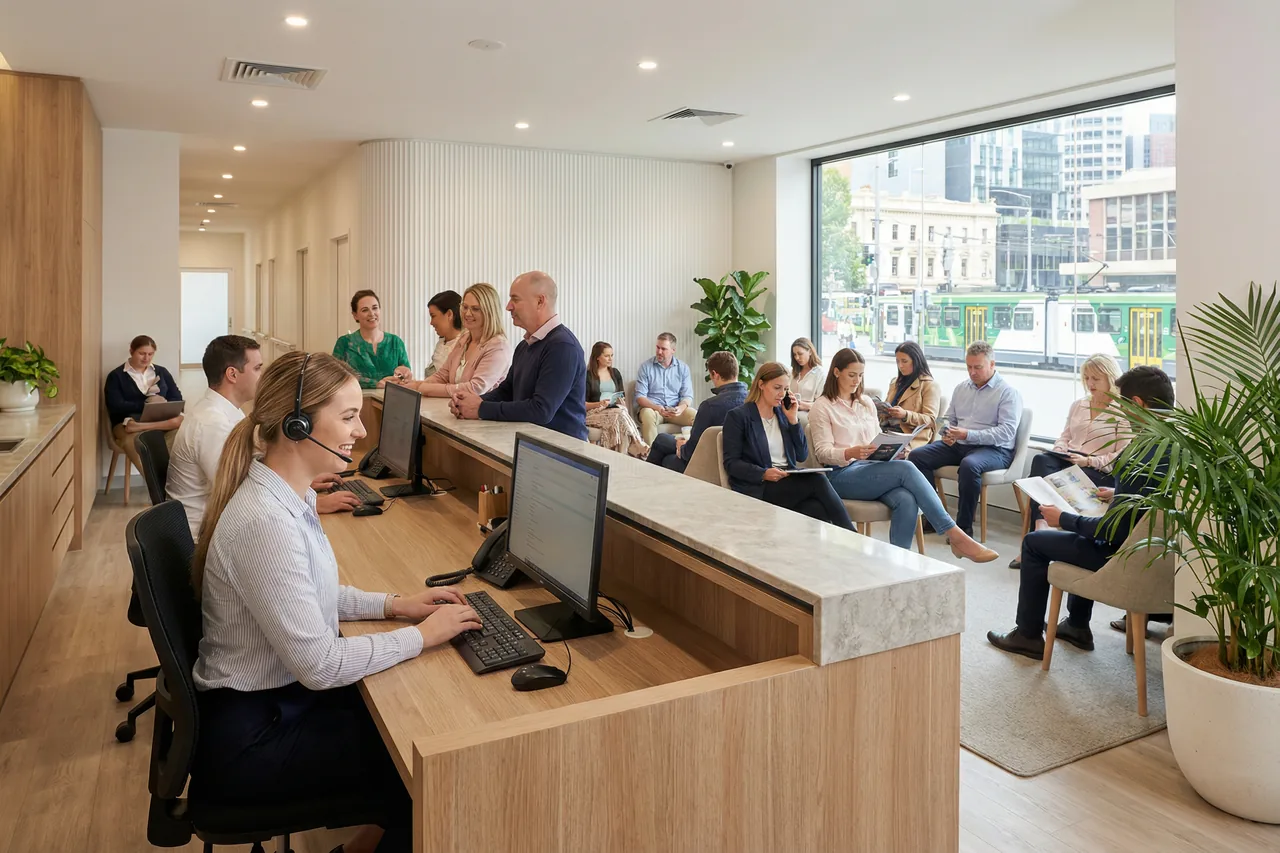
The clinic's reception team managing a busy patient queue with the Click2Call Cloud PBX system.
The Results
The most significant result was the elimination of the documentation gap. Within the first week of going live, the practice manager noted that the manual note-taking policy had effectively become redundant for call content — every call was now automatically transcribed and stored. The 30% documentation gap dropped to zero. Receptionists reported that they felt less pressure during busy periods, knowing that the call content was being captured automatically.
The compliance review process changed fundamentally. Previously, the practice manager would spend approximately two hours per week reviewing a sample of handwritten call notes. Now, the same review takes around 30 minutes using the searchable transcript portal. The AI sentiment flagging means that the practice manager can focus review time on calls that may have involved a difficult patient interaction, rather than reviewing a random sample.
The after-hours AI Receptionist resolved the out-of-hours visibility problem immediately. In the first month, the clinic received 47 after-hours calls that were handled by the AI Receptionist. Of those, 6 were directed to emergency services, 38 resulted in a message being sent to the on-call GP, and 3 were resolved by the AI Receptionist providing the clinic's next available appointment time. The practice manager described this as "a complete change in how we think about after-hours calls."
The consulting room integration also delivered an unexpected benefit. GPs can now transfer calls directly from reception to their consulting room extension, without the patient having to hang up and call a different number. The practice manager noted that this had reduced the number of "callback" requests from GPs, as patients could now be connected directly during the consultation.
"The transcription feature alone was worth the switch. We went from having no record of patient calls to having a searchable archive of every conversation. The compliance review process that used to take two hours a week now takes 30 minutes. And the after-hours AI Receptionist has genuinely changed how we manage out-of-hours enquiries."
Frequently Asked Questions
Complete Call Compliance, Zero Extra Hardware
Click2Call's Cloud PBX with AI Voice Tools gives your clinic automatic call recording, AI transcription, and 24/7 AI Receptionist coverage — all for $25 per user per month. Start your free trial today.